
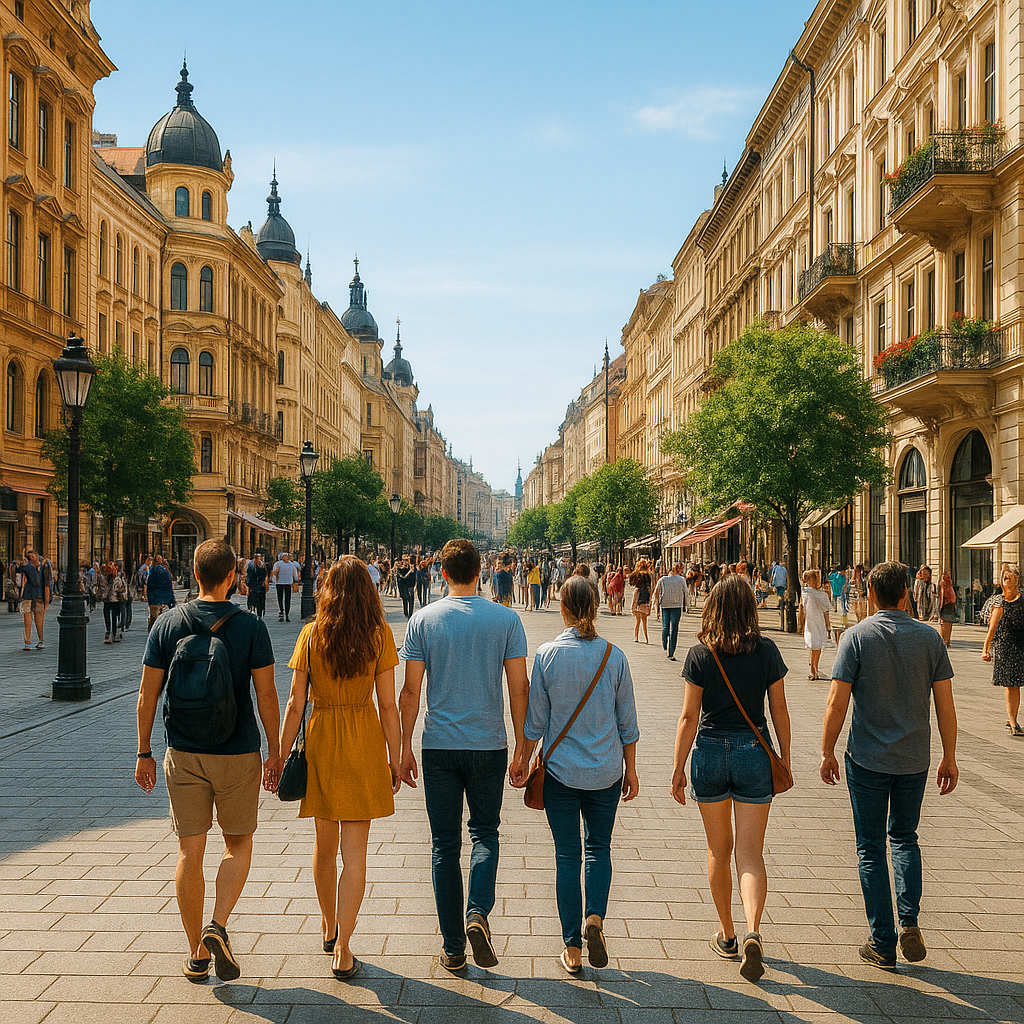

Walking is one of the simplest ways to feel a city properly. No tinted windows, no rushing past the everyday details. Just you, the pavements, the street sounds, and the small discoveries that never show up on a “top 10” list. If you’re looking for walkable cities that blend history, food, art, and neighbourhood life, you’ll love what I call cultural walking cities—places where the best bits are close together and the journey between them is half the fun.
The good news is that more destinations are investing in being pedestrian friendly cities, with better crossings, car-free zones, waterfront promenades, and thoughtfully designed public spaces. Whether you’re planning relaxed city walking holidays, mapping your own city walking routes, or just want a weekend where you can wander without overthinking transport, this guide will help you choose the right places (and explore them well).
What makes a city brilliant to explore on foot?
Not every famous destination is comfortable for walkers. Some are sprawling; others are choked with traffic or built around steep climbs. The best walking cities share a few traits that make exploring feel effortless.
A “walkable” layout you can understand quickly
Great walking cities have a coherent centre and neighbourhoods that connect naturally—often shaped by older street patterns. You can head out with a loose plan and still end up somewhere interesting without constantly checking your phone.
Layers of culture at street level
Museums matter, sure, but street-level culture matters more: markets, murals, independent shops, historic lanes, live music drifting from a doorway, public sculpture in a square. The best cultural walking cities make these experiences easy to stumble into.
Safe, comfortable pedestrian infrastructure
You don’t need perfection. You do want decent pavements, clear crossings, sensible traffic speeds, and enough benches or cafés for breaks. It’s the difference between “I should take a taxi” and “let’s keep going”.
A mix of landmarks and local life
The ideal day on foot might include one major attraction, one market, one neighbourhood wander, and one “I had no idea this existed” moment. The most memorable city walking routes balance highlights with everyday charm.
European cities that reward curious walkers
Europe is packed with destinations made for wandering, but a few stand out for how naturally culture and walkability fit together.
Florence, Italy: Renaissance beauty in a compact footprint
Florence is a masterclass in how a city can feel grand and intimate at the same time. The historic centre is compact enough to explore without fatigue, and the density of art and architecture is almost unfair.
Spend your morning walking from Piazza del Duomo to Piazza della Signoria, then drift towards the Arno. Cross the Ponte Vecchio, not because it’s on the list, but because the light over the river is always doing something interesting.
Don’t miss on foot
- Oltrarno workshops and artisan streets (more atmosphere, fewer crowds)
- Sunset climb towards Piazzale Michelangelo (steep but iconic)
- A slow wander past gelaterias, bookshops, and small churches that quietly house major art
Best for: first-time cultural travellers, art lovers, long lunches and slow evenings.
Lisbon, Portugal: Hills, viewpoints, and neighbourhood soul
Lisbon is extremely walkable in the sense that so much is close together—but you’ll feel the hills. The reward is a city designed for dramatic reveals: stairways, miradouros (viewpoints), tiled façades, and streets that curve into little squares.
A smart approach is to explore one neighbourhood at a time. Baixa and Chiado are easy to connect on foot, while Alfama is a joyful tangle of lanes where getting “lost” is basically the plan.
Don’t miss on foot
- Alfama’s backstreets in the morning before the day gets busy
- A viewpoint-to-viewpoint mini route: Miradouro de Santa Catarina to São Pedro de Alcântara
- Riverside walking near Cais do Sodré for a flatter stretch
Tip: Wear proper shoes with grip—Portuguese pavement can be slippery.
Best for: scenic walkers, food-and-music travellers, photographers.
Kyoto, Japan: Temples, lanes, and quiet cultural moments
Kyoto isn’t just about ticking off famous temples. It’s about how the city feels between them: narrow streets, wooden façades, small gardens, soft rituals of daily life. Many key areas are made for walking, especially if you plan your days by district.
Gion and Higashiyama are ideal for early-morning walks when the streets are calm. The Philosopher’s Path is a classic for good reason—simple, beautiful, and lined with small stops you can choose as you go.
Don’t miss on foot
- Higashiyama lanes around Kiyomizu-dera
- Philosopher’s Path linking temples and cafés
- Nishiki Market for a culture-and-snacking stroll
Best for: travellers who love detail, tradition, and unhurried exploration.
Edinburgh, Scotland: Storybook streets with real local energy
Edinburgh is wonderfully walkable, with a dramatic skyline that makes every direction feel purposeful. The Old Town gives you history and atmosphere; the New Town brings elegant streets and great galleries. You can link both easily on foot—just be ready for stairs and slopes.
Start on the Royal Mile, but dip into the closes (those narrow alleyways) where the city’s personality really shows. Then walk Princes Street Gardens as a palate cleanser before heading to Stockbridge for an easy-going neighbourhood wander.
Don’t miss on foot
- A loop: Royal Mile → Grassmarket → Victoria Street → Princes Street Gardens
- The Water of Leith Walkway for a calmer, greener route
- Sunset views from Calton Hill (short climb, big payoff)
Best for: history lovers, pub culture, weekend breaks.
Barcelona, Spain: Architecture, beaches, and neighbourhood strolls
Barcelona is a strong contender among pedestrian friendly cities, especially once you lean into neighbourhood exploration. The city’s grid makes it navigable, and the mix of grand avenues and small lanes keeps walks interesting.
Pair the Gothic Quarter with El Born for a day of lanes, galleries, and tapas. Add a long promenade along the beach when you want something open and breezy. And even if you’re not an architecture obsessive, walking past Gaudí’s work feels like touring a city that decided to be playful.
Don’t miss on foot
- Gothic Quarter to El Born, stopping at small squares for a drink
- Park Güell area (combine walking with public transport for the uphill stretch)
- Seafront promenade from Barceloneta towards Port Olímpic
Best for: food lovers, design fans, “walk then swim” days.
Copenhagen, Denmark: Calm, clean, and designed for people
Copenhagen earns its place on any list of walkable cities because it actively prioritises people over cars. Streets are wide, crossings are easy, and public spaces invite you to linger. Even when you’re not in a designated pedestrian zone, it still feels comfortable.
A great walking day here is simple: Nyhavn in the morning, canals and design shops midday, then a relaxed stroll through parks or along the waterfront.
Don’t miss on foot
- Strøget and the surrounding lanes for shopping and architecture
- The lakes circuit (easy, scenic, great for a reset)
- Christianshavn and canal-side walking
Best for: relaxed urban breaks, design and modern culture, low-stress exploring.
Marrakech, Morocco: A sensory walking adventure (with a plan)
Marrakech is a different kind of walking city—less “orderly stroll” and more “immersive maze”. The medina is one of the world’s great pedestrian environments, packed with stalls, courtyards, hidden riads, and sudden bursts of colour.
It helps to embrace a slower pace and set simple goals: one market, one garden, one food stop. Use a trusted map app (or a local guide for your first day) until you’ve got your bearings.
Don’t miss on foot
- Jemaa el-Fnaa at dusk (chaotic, captivating)
- Souk wandering with deliberate pauses to avoid fatigue
- Jardin Majorelle area for a calmer contrast
Best for: sensory travellers, shoppers, anyone who loves lively street culture.
Melbourne, Australia: Laneways, coffee, and culture in bite-sized blocks
Melbourne is a treat for walkers who enjoy “micro-discoveries”: street art, tiny galleries, hidden bars, and cafés that take coffee seriously. The city centre is laid out in a grid, making it easy to explore, and the laneway culture adds texture.
Build your walking day around neighbourhood pockets. The CBD laneways, Fitzroy’s creative streets, and Southbank’s riverside paths all feel distinct, and you can connect them without much fuss.
Don’t miss on foot
- Hosier Lane and the surrounding street art network
- The Yarra River walk for an easy, scenic route
- Fitzroy’s Brunswick Street for independent shops and people-watching
Best for: food and coffee lovers, artsy city breaks, relaxed pacing.
How to plan city walking holidays without overthinking it
Walking-based trips sound wonderfully simple—until you try to cram too much into one day. A little planning goes a long way, especially if you want your city walking holidays to feel energising rather than exhausting.
Build your day around “neighbourhood clusters”
Instead of bouncing across the city, choose one or two areas and explore them properly. You’ll see more, stress less, and experience the city as locals do.
Aim for one “anchor” attraction per day
Pick a museum, a major historic site, or a guided experience as your anchor. Everything else can be flexible: cafés, markets, bookshops, side streets. This approach keeps your schedule human.
Choose routes with built-in breaks
The best city walking routes include places to pause: parks, riversides, public squares, food markets. Think of breaks as part of the route, not a failure of stamina.
Time your walks for atmosphere
Early morning is for peaceful streets and great photos. Late afternoon is for golden light and aperitif culture. Evenings are ideal for gentle post-dinner wandering—especially in warmer destinations.
Simple ideas for cultural walking routes (that work in almost any city)
You don’t need a complicated itinerary to get a rich, cultural day on foot. Try one of these “route templates” and adjust as you go.
The “Old Town to New Town” walk
Start in the historic centre for architecture and museums, then walk towards modern neighbourhoods for shops, galleries, and dinner.
Why it works: you get contrast—past and present in one day.
The “Market to Museum” walk
Begin with a food market (breakfast and browsing), then walk to a major museum or cultural site, finishing in a café-lined district.
Why it works: food keeps energy up, and you’ll feel connected to local life.
The “Waterline” walk
Follow a river, canal, or coastline for a few hours, dipping inland when something catches your eye.
Why it works: water routes are naturally scenic, flat, and easy to navigate.
The “Street Art and Small Galleries” walk
Pick a creative neighbourhood and explore slowly, letting murals, independent studios, and pop-up spaces guide you.
Why it works: it’s culture without pressure—more discovery, less formality.
What to pack for a full day on foot (without looking like you’re hiking)
You don’t need trekking gear, but you do need a few smart essentials to stay comfortable.
- Supportive shoes you’ve already worn in (blisters ruin plans quickly)
- Light layers for changing weather and indoor/outdoor temperature swings
- A small refillable water bottle
- Plasters and blister protection (quiet heroes of travel)
- Portable charger if you’re relying on maps and camera use
- A crossbody bag or secure day bag that keeps your hands free
If you’re visiting a hot city, add sunscreen and a hat. If it’s rainy, a compact umbrella and a waterproof jacket beat “hoping for the best”.
Staying respectful while walking through living culture
One reason walking is so powerful is that you’re moving through real neighbourhoods, not just tourist zones. A few small habits help you travel well.
Be mindful with photos
If you’re photographing people, ask when possible. In places of worship or in residential streets, keep your camera use discreet.
Keep doorways and pavements clear
It’s easy to stop suddenly when you spot something interesting. Just step aside so locals can pass—especially in busy old towns.
Support local businesses thoughtfully
A coffee, a pastry, a small purchase from a market stall—it all adds up. Walking makes it easy to spread your spending beyond the most obvious spots.
Are pedestrian friendly cities always the best choice?
Not necessarily. Some less-walkable cities still offer incredible experiences, and a mix of walking plus public transport can be the perfect balance. But if your ideal day involves drifting from a gallery to a bakery to a viewpoint with no rigid schedule, then prioritising pedestrian friendly cities is a shortcut to a better trip.
It also changes the feel of your holiday. When you’re not constantly planning routes on the Underground or hunting for parking, you end up with more mental space for what you came for: the culture, the conversations, the small surprises.
Choosing your next walking city: a quick checklist
If you’re deciding between a few destinations, ask yourself:
- Do I want compact and dense (Florence) or spacious and scenic (Copenhagen)?
- Am I happy with hills and viewpoints (Lisbon, Edinburgh), or do I prefer flatter routes?
- Do I want classic landmarks or neighbourhood culture (Melbourne’s laneways, Barcelona’s districts)?
- Will I enjoy a maze-like medina (Marrakech), or do I prefer clear navigation?
Pick the city that matches your walking personality. The best trip isn’t the one with the longest checklist—it’s the one that feels good in your legs and your day-to-day pace.
Final thoughts: walk until the city starts talking back
The magic of walking is that it turns a destination into a relationship. You start recognising patterns: the way locals queue for bread, the time shops open their shutters, the streets that get louder as evening arrives. In the best walkable cities, culture isn’t something you book for a time slot—it’s what happens around you as you move.
So choose a city that invites wandering. Sketch out a few loose city walking routes, keep space for detours, and let your plans be shaped by what you smell, hear, and stumble upon. That’s when a trip stops feeling like tourism and starts feeling like you’ve genuinely been somewhere.