
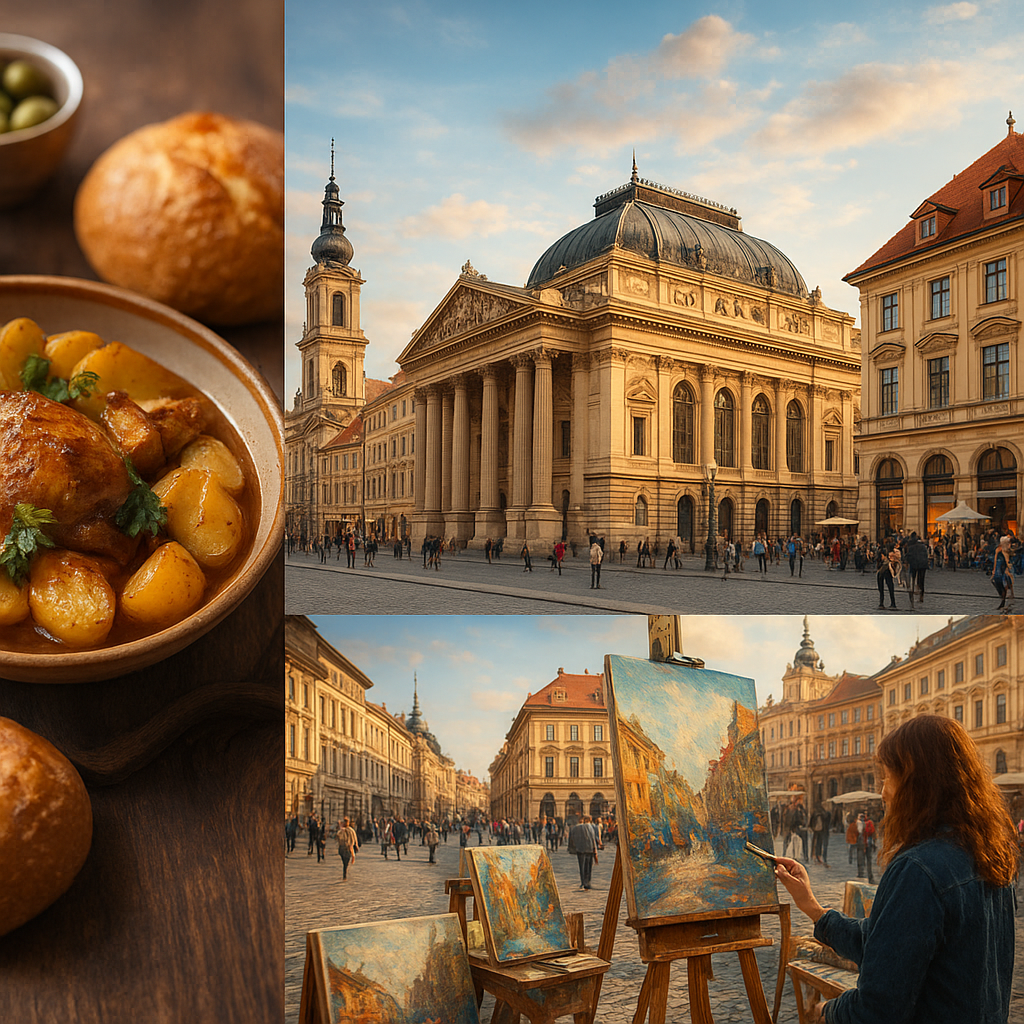

Food, Art and Architecture: The Ingredients of a Culturally Rich City
If you’ve ever arrived somewhere new and instantly felt that buzz — the hum of a busy market, the scent of something delicious drifting from a tiny café, the sight of a striking building catching the light — you already understand why people chase cultural city experiences. Some places just have it. They feel layered, lived-in, proudly expressive. And the best part is that you don’t need to be an art expert or an architecture nerd to enjoy them. You simply need curiosity.
In this guide, we’ll explore what really makes a city culturally rich through the trio that tends to shape our strongest travel memories: food culture travel, art and architecture cities, and the everyday details that bring them to life. Think of this as a friendly city culture guide — the kind you’d want before planning a weekend break or a longer trip focused on heritage, creativity, and great meals. Along the way, we’ll also look at how the most compelling cultural tourism cities balance tradition and modern life without turning into an open-air museum.
Why Culture in Cities Feels Different (and More Intense)
Culture exists everywhere, of course. But in cities it’s concentrated. Ideas collide. Communities overlap. Old and new sit side by side, sometimes awkwardly, sometimes beautifully.
A culturally rich city doesn’t just show culture — it lets you bump into it. You hear it in different languages on the bus. You taste it in street food that’s been perfected over generations. You see it in buildings that tell stories about power, money, migration, faith, rebellion, or renewal.
And importantly, culture isn’t limited to formal attractions. Museums matter, but so do barbershops, bakeries, public squares, corner shops, night markets, and music drifting out of a basement venue.
So what separates a city with “things to do” from one that feels genuinely culturally rich?
Let’s break it down.
Food: The Fastest Way to Understand a City
Food is often the quickest, most joyful introduction to local identity. It’s also one of the most accessible. You can’t always decode a painting or know what a building style is called — but you can taste a dumpling, sip a broth, or try a pastry and understand something instantly.
How food culture becomes a living museum
The best food culture travel experiences aren’t just about restaurants with long tasting menus (though those can be brilliant). They’re about everyday places where the city feeds itself.
Look for:
- Markets where locals buy ingredients, not just souvenirs
- Small family-run eateries with short menus and long histories
- Neighbourhood specialities that change from district to district
- Seasonal foods that reflect climate, tradition, and religious calendars
Food tells you what people value. Time, generosity, thrift, celebration, community. It also reveals migration stories — how new arrivals bring flavours and how cities adapt them into something local.
A culturally rich city lets you taste its past and present in the same day: traditional dishes alongside modern interpretations; historic cafés next to experimental pop-ups.
The social side of eating
Food culture is never just about what’s on the plate. It’s about how people eat.
Is the city built for lingering lunches or quick bites? Do people gather in late-night cafés or crowd into street stalls? Is it normal to share dishes, or is everyone on their own schedule?
These habits shape the “feel” of a place just as much as landmarks do. When you’re seeking cultural depth, choose experiences that put you near locals rather than around them.
What to do: simple ways to eat like a local
You don’t need a big budget to have meaningful food experiences. Try:
- Joining a market tour led by someone who cooks or lives nearby
- Ordering the most common lunch in an office district (often the real deal)
- Visiting a long-standing bakery or tea house at the hour locals go
- Asking a taxi driver or shopkeeper: “Where would you eat if you had one free evening?”
It’s a small question that often unlocks a memorable night.
Art: The City’s Voice (Even When It’s Whispering)
Art gives a city emotional range. It offers beauty, critique, humour, and sometimes discomfort — all signs of a place that’s alive rather than polished.
The richest cities aren’t those with the most galleries; they’re the ones where art is woven into public life.
Big institutions matter — but so does the street
Museums and galleries do important work: preserving heritage, showcasing masterworks, supporting artists, educating visitors. In many cultural tourism cities, these institutions are the headline attractions.
But don’t stop there.
A city’s cultural strength also shows up in:
- Street art and murals (often documenting local politics or identity)
- Small galleries that champion emerging voices
- Independent cinemas and theatres
- Community art spaces offering workshops and exhibitions
- Craft traditions like ceramics, textiles, printmaking, or woodwork
A culturally rich city makes room for both the revered and the rebellious. It allows artists to experiment, not just perform for tourists.
Art as a reflection of community
One way to tell whether a city’s arts scene is truly rooted is to see who it’s for.
Is there programming for families, young people, and local neighbourhoods? Are exhibitions bilingual or accessible? Do you see locals attending events — not just visitors?
When art is woven into daily life, it creates stronger cultural city experiences because you’re participating in something real, not consuming a packaged version of culture.
What to do: find the city’s creative pulse
If you want to experience art in a way that feels personal:
- Visit a free gallery opening (often lively and welcoming)
- Look up a local print fair, craft market, or design week
- Spend an hour in a public library or cultural centre (underrated cultural gems)
- Seek out artist-led tours in creative districts
Often, the most memorable art isn’t behind a ticket barrier — it’s in a community hall, a converted warehouse, or a quiet courtyard.
Architecture: The City’s Memory Made Visible
If art is a city’s voice, architecture is its memory. Buildings show what a city has survived, what it values, and who it was built for. A culturally rich place doesn’t need to be perfectly preserved, but it does need layers — evidence of different eras, ambitions, and communities.
This is where art and architecture cities really stand out. They offer more than pretty façades; they offer stories in brick, stone, glass, steel, and concrete.
What makes architecture culturally significant?
Iconic landmarks help, but cultural richness isn’t only about famous buildings. It’s about:
- Historic districts that still function as real neighbourhoods
- Public spaces designed for gathering, not just passing through
- Religious and civic buildings that anchor community life
- Adaptive reuse — old factories turned into studios, markets, or housing
- Contrasts between modern design and heritage structures
A city with cultural depth often shows careful tension: protection of heritage alongside bold new architecture. Not every new building needs to be a spectacle, but the best cities build with intent, not just profit.
The hidden language of streets and layouts
Architecture isn’t only vertical. It’s also the shape of streets, the width of pavements, the presence of trees, the way the city treats pedestrians.
Ask yourself:
- Is it pleasant to walk?
- Are public squares used or avoided?
- Does the city prioritise people over cars?
- Are older neighbourhoods connected or isolated?
Cities that invite walking tend to offer stronger cultural discovery. You’re more likely to stumble upon a courtyard café, a small exhibition, or a local festival when the streets encourage wandering.
What to do: experience architecture beyond the postcard view
To get more from a city’s built environment:
- Take a self-guided walk focused on one era (Victorian, modernist, medieval, post-war)
- Visit a train station, market hall, or public library — everyday architecture often reveals the most
- Look for open house weekends where buildings usually closed to the public open their doors
- Spend time in a park or square and watch how the city uses it
The goal isn’t to memorise styles. It’s to notice what the city prioritises.
The Secret Ingredient: Everyday Culture and Local Rituals
Food, art, and architecture are powerful — but a city becomes truly culturally rich when these elements are supported by everyday rituals.
This is the part that can’t be installed overnight. It grows slowly through habit and community.
Festivals, traditions, and the rhythm of the year
Annual events reveal how a city celebrates, mourns, and comes together. Some are world-famous; others are deeply local.
A strong cultural calendar might include:
- Religious celebrations with processions or special foods
- Seasonal markets and harvest events
- Film, jazz, literary, or theatre festivals
- Pride events and community parades
- Design and craft fairs
These moments create shared memory. They’re also a reminder that culture isn’t static — it moves with the calendar and evolves with the people.
Language, humour, and local etiquette
Culture lives in how people greet each other, how they queue, how they argue, how they make peace. Even small details — like whether cafés bring the bill automatically or let you linger — shape your experience.
When using a city culture guide, don’t just focus on attractions. Learn a few local phrases. Notice how neighbourhoods differ. Pay attention to what people wear to the market versus the theatre. These details add depth to your understanding.
Diversity and Migration: The Engine of Cultural Energy
Many of the world’s most loved cultural tourism cities are shaped by migration. New communities bring cuisine, music, festivals, faith traditions, and creative movements — and over time these become part of the city’s identity.
A culturally rich city doesn’t hide this complexity. It acknowledges it.
Signs a city embraces its multicultural identity
You can often spot cultural openness through:
- Neighbourhoods with distinct identities that are respected rather than sanitised
- Food scenes that go beyond “international” and feel genuinely community-led
- Museums and tours that address difficult history honestly
- Cultural centres and events representing multiple communities
- Public art that reflects different voices
Cultural richness isn’t only about beauty. It’s also about truth. Cities that tell honest stories — including the uncomfortable parts — often feel more meaningful to visit.
Culture That’s Alive vs Culture That’s Performed
Some cities look cultural on the surface, but feel strangely hollow once you’re there. This usually happens when a place becomes too focused on visitor consumption.
There’s a difference between a city that shares culture and one that performs it.
How to spot the difference
A city’s cultural life is likely thriving if you see:
- Locals attending museums and shows
- Affordable spaces for artists and makers
- Independent businesses alongside major brands
- Residential life in historic centres (not only short-term lets)
- Cultural investment outside the tourist core
Meanwhile, if the old town feels like a themed shopping centre, and every “traditional” experience comes with a scripted performance, cultural richness may be at risk.
This doesn’t mean you should avoid popular places — it just means go a little deeper. Catch a weekday concert. Visit a neighbourhood market. Eat where people grab lunch between work meetings.
Building Your Own Cultural City Itinerary (Without Overplanning)
The best cultural city experiences often come from a loose plan with room for surprise. You want enough structure to avoid missing what matters, but enough flexibility to follow your nose — sometimes literally.
A simple 3-part daily structure
Here’s an easy framework that works in almost any city:
1) One anchor experience (morning)
Choose one key cultural activity each day: a major museum, a historic site, a guided architecture walk, or a gallery district.
This keeps your trip purposeful without feeling rushed.
2) One neighbourhood wander (afternoon)
Pick an area that interests you — perhaps a creative quarter, a waterfront redevelopment, or a historic residential district — and explore on foot.
Stop for coffee. Browse bookshops. Notice the buildings. Look for small galleries or street art.
3) One food-focused moment (evening)
Make dinner part of the cultural plan. Choose a place with regional dishes, or go where locals go after work. If you’re comfortable, sit at the bar or communal table — it’s often the easiest way to chat.
This structure balances the “must-sees” with the lived-in texture that makes a city memorable.
What Makes a City Culturally Rich? A Quick Checklist
If you’re comparing destinations or trying to understand why one city feels more culturally compelling than another, here’s a helpful lens:
Food
- Distinct local dishes and strong market culture
- Affordable everyday eating alongside special-occasion dining
- Food shaped by history, seasons, and migration
Art
- Major institutions and grassroots creative spaces
- Public art that reflects local identity
- A scene that locals engage with regularly
Architecture
- Layers of history visible in the built environment
- Walkable neighbourhoods and usable public spaces
- Old buildings adapted creatively, not abandoned
Community and authenticity
- Festivals and traditions that feel community-led
- Cultural access beyond the tourist centre
- Honest storytelling about the city’s full history
Use this as your mental city culture guide when researching your next trip — not to judge places harshly, but to spot where you’ll find the richest moments.
Choosing Cities for Cultural Tourism Without Falling for Hype
Search results and social media love lists: “top 10 cultural cities”, “hidden gems”, “best art capitals”. They can be useful, but they often flatten what makes places special.
When looking for meaningful cultural tourism cities, focus less on hype and more on fit.
Ask yourself:
- Do I want museum-heavy days, or street-level culture?
- Am I more excited by historic architecture or modern design?
- Do I travel through food, nightlife, literature, or craft?
- Do I prefer compact cities for walking, or sprawling ones with distinct neighbourhoods?
A city becomes culturally rich to you when it matches your curiosity.
Bringing It All Together: Culture You Can Taste, See, and Walk Through
A city earns cultural richness by offering layers — flavours that speak of history, art that expresses identity, and architecture that holds memory in place. The magic happens when these elements aren’t isolated attractions, but part of daily life.
That’s why the most satisfying cultural trips rarely come from racing between landmarks. They come from lingering: in a market, on a bench in a square, under the shadow of an old building, in a small gallery where someone is genuinely excited to tell you about a local artist.
So if you’re planning your next break and want more than pretty photos, lean into the trio that rarely disappoints: eat with intention, look closely at the art around you, and walk the city like the buildings have something to say. In the best places, they really do.